Investigating Interconnections in a Wetland Ecosystem
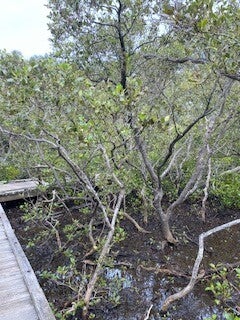
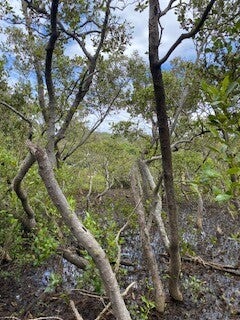
This learning experience positions students as young geographers exploring the concept of interconnection within the mangrove ecosystem at Careel Bay Bushland Reserve. Through structured field observation, students investigate relationships between living elements (flora and fauna), non-living elements (tides and sediment), and human infrastructure (housing and recreational facilities).
What to expect
During the visit, students will be provided with a worksheet (Appendix 1) where they are asked to record annotated sketches, observational notes, and inquiry questions. The focus of this worksheet will be on how mangroves adapt to tidal conditions and how the ecosystem supports biodiversity. Teachers scaffold inquiry tasks using prompts that encourage causal reasoning and systems thinking. This supports GE2-1 and GE2-2 by moving students beyond surface description toward analytical understanding.
Developing understanding
Following the excursion, students collaboratively construct a visual systems map demonstrating their understanding of the ecological relationships they have observed whilst in the wetland. This activity consolidates learning by requiring students to synthesise field observations into conceptual representations. The experience reflects principles of place-based education (Preston, 2015), grounding learning in local context and fostering geographical literacy through lived experience.